
Opis
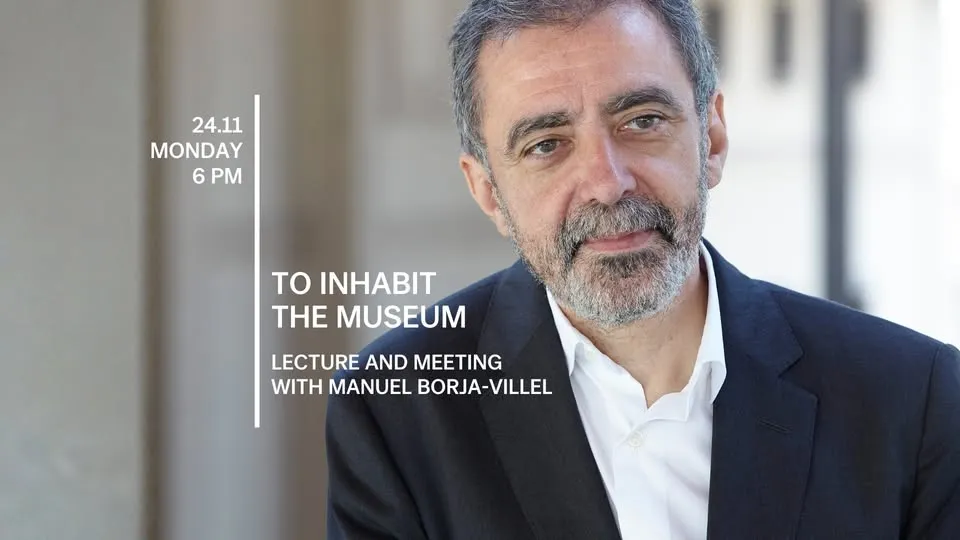
To inhabit the Museum Lecture and meeting with Manuel Borja-Villel 📍 Zachęta | in the exhibition space 🎟️ free admission 📅 24.11 Monday, 6 PM partner: Instituto Cervantes Varsovia Culture is a construction-one that can serve either to foster coexistence or to produce alterities, defining as "different" those who are perceived as outside the norm. It can illuminate the path ahead or conceal injustice. In The Eighteenth Brumaire, Karl Marx pointed out how many of the revolutionary ideas of 1789 were later appropriated, in 1851, by a conservative bourgeoisie that sought to reverse their original aims. The German philosopher observed that, in moments of transformation, societies summon up the past in order to decipher the present. Yet he also noted that they do not always discern how history is transmitted, nor the ways in which it shapes their own era-often becoming a weight that bends them in the opposite direction of their intended course. If, in other eras, conservative factions called for a return to the established order, today they adopt the language of openness to curtail the very freedom they claim to defend. The challenge lies in bringing to the present that which the past has concealed and in recovering the words from which we have been deprived-while remaining aware of the epistemic violence that underlies humanist knowledge. It is contradictory to proclaim a universal thought while forgetting that, historically, not everyone has had access to the (often partial and self-interested) construction of the world. The creation of a shared, alternative narrative is now more necessary than ever. It demands a practice that resists what has been imposed-one that also emerges from the voices of those groups and individuals who have long been denied speech. Only then can we see that the so-called universal language is not as universal as it claims. In doing so, we also transcend the limits imposed by disciplinary boundaries. Today, institutions oscillate between being spaces of power-condemning to submission those they claim to protect-and becoming territories of interpellation that nurture alternative ways of acting and thinking, ultimately encouraging the infinite possibilities of imagining and materializing life. To inhabit a museum means that society makes it its own. It implies understanding the museum as a site of institutional experimentation-a space where our deepest desires and greatest fears are negotiated, and where, in the process, other universes may be imagined into being. __________ ▪️ Manuel Borja-Villel (Burriana, 1957) is a leading art historian and curator. He directed the Museo Reina Sofía in Madrid from 2008 to 2023, where he radically restructured the collection and launched the "Museo en Red" network. Previously, he led MACBA in Barcelona (1998-2007) and the Fundació Antoni Tàpies (1989-1998). His practice has been pivotal in rethinking museum narratives, institutional governance, and curatorial methodologies. He has curated major exhibitions of key artists such as Marcel Broodthaers and Lygia Clark, while also reviving interest in overlooked figures like Andrzej Wróblewski and Nasreen Mohamedi. Among his many thematic exhibitions, the large-scale reorganization of the Reina Sofía collection, "Vasos Comunicantes", stands out as a landmark project. Recently, he curated exhibitions at the Pompidou Metz and in Barcelona, proposing alternatives to the Western museum model. He also organized a retrospective of filmmaker Trinh T. Minh-ha. Borja-Villel has published widely, taught internationally, and created influential educational programs including the "P.E.I." at MACBA and "Tejidos Conjuntivos" at Reina Sofía. He holds a Ph.D. from CUNY, is the author of "Campos Magnéticos", and has received several distinctions, including an honorary doctorate from the Universitat Oberta de Catalunya. Photo: courtesy of Manuel Borja-Villel
To inhabit the Museum Lecture and meeting with Manuel Borja-Villel 📍 Zachęta | in the exhibition space 🎟️ free admission 📅 24.11 Monday, 6 PM partner: Instituto Cervantes Varsovia Culture is a construction-one that can serve either to foster coexistence or to produce alterities, defining as "different" those who are perceived as outside the norm. It can illuminate the path ahead or conceal injustice. In The Eighteenth Brumaire, Karl Marx pointed out how many of the revolutionary ideas of 1789 were later appropriated, in 1851, by a conservative bourgeoisie that sought to reverse their original aims. The German philosopher observed that, in moments of transformation, societies summon up the past in order to decipher the present. Yet he also noted that they do not always discern how history is transmitted, nor the ways in which it shapes their own era-often becoming a weight that bends them in the opposite direction of their intended course. If, in other eras, conservative factions...
Terminy
24 Listopada 2025, Poniedziałek
17:00
Organizator
Z
Zachęta – Narodowa Galeria Sztuki to największa i najbardziej znana galeria sztuki współczesnej w Polsce. Przybliża publiczności prace uznanych artystów zagranicznych oraz aktywnie promuje polskich młodych twórców. Zachęta to też najstarszy salon wystawowy Warszawy, którego historia sięga 1860 roku, utworzony przez Towarzystwo Zachęty Sztuk Pięknych. Galeria mieści się w samym centrum Warszawy, w pięknym eklektycznym gmachu, który ocalał w czasie II wojny światowej. Poza inspirującymi wystawami oferuje bogaty program wydarzeń towarzyszących, w tym: spotkania z artystami, pokazy filmowe, koncerty, oprowadzania i warsztaty artystyczne dla dzieci, rodzin, pracowników firm, a także seniorów. Zachęta organizuje wystawy indywidualne i zbiorowe, w tym problemowe; kuratorzy galerii inicjują też i współtworzą ekspozycje sztuki polskiej za granicą. Dyrektor Zachęty jest komisarzem Pawilonu Polskiego w Wenecji na Międzynarodowej Wystawie Sztuki i Międzynarodowej Wystawie Architektury. W 2008 roku Polski Pawilon otrzymał najwyższą nagrodę Złotego Lwa za ekspozycję „Budynków życie po życiu”. Do najgłośniejszych ekspozycji zorganizowanych w Zachęcie, w ostatnich kilkunastu latach, należą: „Klasycy XX wieku”, „Słońce i inne gwiazdy”, „Nowa strefa. Sztuka chińska”, „Warszawa – Moskwa / Moskwa – Warszawa 1900–2000”, „czarny alfabet – konTEKSTY sztuki afroamerykańskiej”, „Rewolucje 1968”, „Inwazja dźwięku. Muzyka i sztuki wizulane”, „Płeć? Sprawdzam. Kobiecość i męskość w sztuce Europy Wschodniej”. „Pokolenie przemiany. Nowa sztuka z Indii”, a także wystawy przygotowane z myślą o dzieciach, jak: „Sztuka współczesna dla wszystkich dzieci”, „Arka Wilkonia”, „Lato w mieście. Wystawa nie tylko dla dzieci”, „Interaktywny plac zabaw”. W ramach wystaw indywidualnych zaprezentowaliśmy twórczość, m.in.: Tadeusza Kantora, Pawła Althamera, Daniela Libeskinda, Wilhelma Sasnala, Krzysztofa Wodiczki, Luca Tuymansa, Włodzimierza Pawlaka, Pawła Jarodzkiego, Zbigniewa Libery, Jakuba Juliana Ziółkowskiego, Jana Lebensteina, Anette Messager, Allana Sekuli, Katarzyny Kozyry, Wolfganga Tillmansa i wielu innych indywidualności XX i XXI wieku. Od 2003 roku, co dwa lata, Zachęta – wspólnie z Fundacją Deutsche Bank i Deutsche Bank Polska – organizuje konkurs i wystawę pokonkursową „Spojrzenia” dla najbardziej interesujących młodych twórców na polskiej scenie artystycznej. Ponadto galeria organizuje sympozja, dyskusje problemowe, warsztaty i spotkania promocyjne, przeglądy filmów, koncerty i inne wydarzenia towarzyszące wystawom. Ważnym elementem oferty Zachęty jest edukacja najmłodszych, ale też oferta dla osób starszych. Zarówno warsztaty rodzinne, jak spotkania dla seniorów (spotkania z artystami w cyklu Patrzeć / zobaczyć, czy warsztaty taneczne) cieszą się ogromną popularnością. Zachęta gromadzi dzieła polskiej sztuki współczesnej, tworząc własną kolekcję. Aktualnie zbiory obejmują blisko 3 500 obiektów.